
Infertility can be an emotionally challenging journey for couples. When pregnancy does not happen naturally, many people immediately think about IVF. However, IVF is not always the first or the most appropriate treatment option.
In many cases, structural problems within the reproductive system prevent natural conception. Correcting these underlying issues through Fertility Enhancing Surgery may significantly improve the chances of pregnancy without immediately proceeding to assisted reproductive techniques.
If you have been trying to conceive for several months or years, understanding the role of fertility surgery can help you make an informed decision about your treatment.
What Is Fertility Enhancing Surgery?
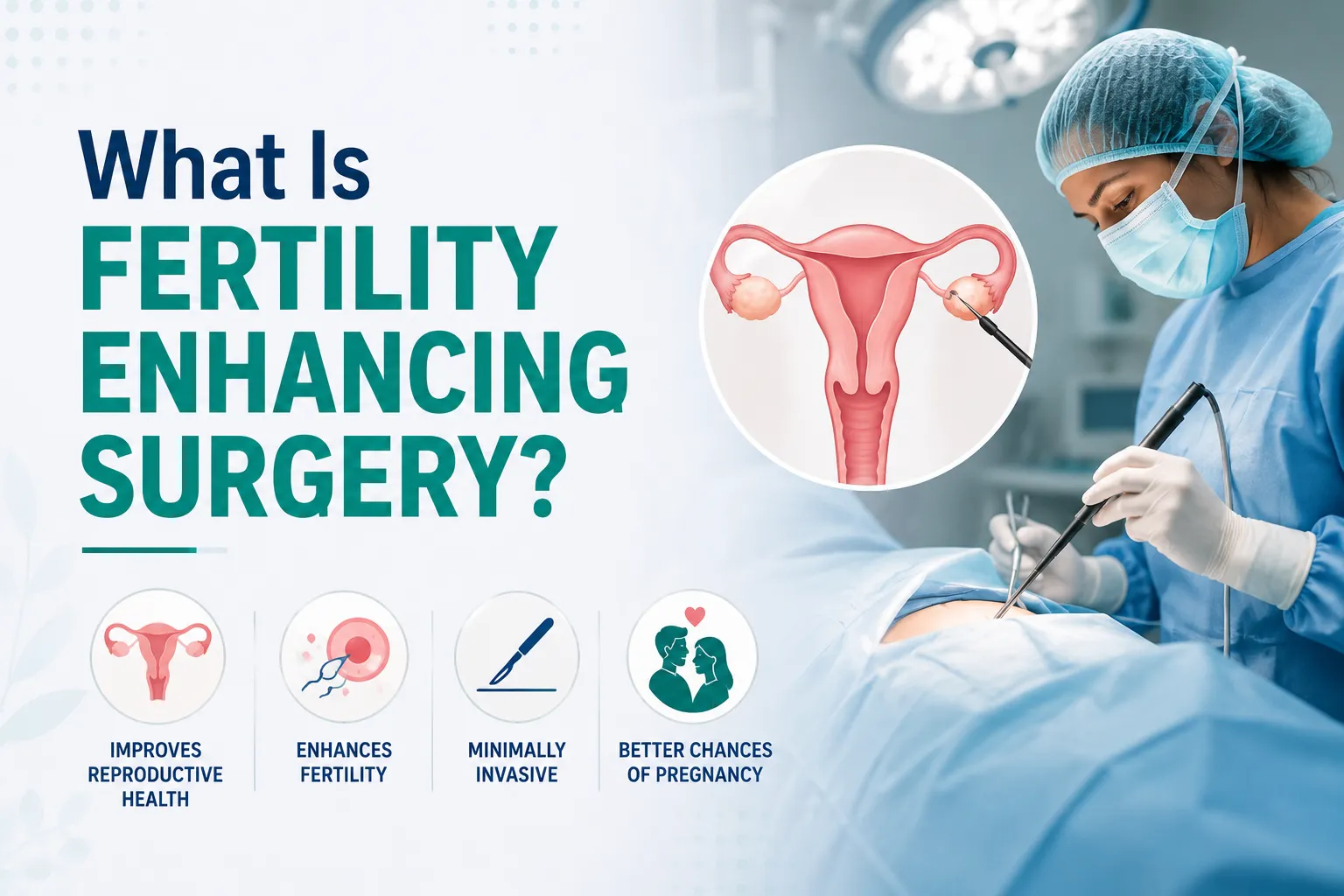
Fertility Enhancing Surgery refers to surgical procedures performed to correct abnormalities that affect a woman’s ability to conceive naturally.
These procedures aim to restore the normal anatomy and function of the reproductive organs, including the uterus, ovaries, and fallopian tubes.
Unlike IVF, which bypasses certain reproductive barriers, fertility surgery focuses on identifying and treating the root cause of infertility.
Common conditions treated through fertility-enhancing procedures include:
- Endometriosis
- Uterine fibroids
- Ovarian cysts
- Blocked fallopian tubes
- Pelvic adhesions
- Uterine septum
- Hydrosalpinx
- Scar tissue caused by previous surgeries or infections
Who Is an Ideal Candidate for Fertility Enhancing Surgery?
Not every infertility case requires surgery.
You may benefit from surgical evaluation if you experience:
- Difficulty conceiving for more than 12 months
- Severe menstrual pain
- Irregular menstrual cycles
- A history of miscarriage
- Pelvic pain
- Previous abdominal or pelvic surgery
- Endometriosis
- Known uterine abnormalities
- Recurrent implantation failure
Women above 35 years of age who have been trying to conceive for more than six months should consider an early fertility evaluation.
Conditions That May Require Fertility Surgery
Endometriosis
Endometriosis occurs when tissue similar to the uterine lining grows outside the uterus.
This condition can affect the ovaries, fallopian tubes, bladder, intestines, and surrounding pelvic structures.
Common symptoms include:
- Painful periods
- Chronic pelvic pain
- Pain during intercourse
- Infertility
Advanced laparoscopic surgery can remove endometriotic lesions while preserving healthy reproductive tissue.
Uterine Fibroids
Fibroids are non-cancerous growths that develop within the uterus.
Depending on their size and location, fibroids can interfere with implantation and pregnancy.
Symptoms may include:
- Heavy menstrual bleeding
- Pelvic pressure
- Frequent urination
- Difficulty becoming pregnant
Removing fertility-affecting fibroids can improve reproductive outcomes in selected patients.
Blocked Fallopian Tubes
The fallopian tubes play an essential role in fertilization.
When the tubes become blocked because of infection, inflammation, or scar tissue, sperm cannot reach the egg.
Treatment options may include:
- Tubal cannulation
- Adhesion removal
- Laparoscopic surgery
Uterine Septum
A uterine septum is a congenital abnormality in which a band of tissue divides the uterus.
Women with this condition may experience:
- Recurrent miscarriages
- Implantation failure
- Infertility
Hysteroscopic surgery can remove the septum and restore the normal shape of the uterus.
Pelvic Adhesions
Adhesions are bands of scar tissue that develop after surgery, infection, or inflammation.
These adhesions can distort reproductive anatomy and interfere with conception.
Minimally invasive surgery can help restore pelvic anatomy and improve fertility potential.
Types of Fertility Enhancing Surgery
Laparoscopic Surgery
Laparoscopy is a minimally invasive procedure performed through small abdominal incisions.
It is commonly used to treat:
- Endometriosis
- Ovarian cysts
- Adhesions
- Tubal disorders
Benefits include:
- Smaller incisions
- Reduced pain
- Faster recovery
- Minimal blood loss
Hysteroscopic Surgery
A hysteroscope is inserted through the cervix to examine the inside of the uterus.
This procedure is used to treat:
- Uterine polyps
- Uterine septum
- Intrauterine adhesions
- Submucosal fibroids
Because there are no external incisions, recovery is usually quick.
Tubal Surgery
Tubal procedures focus on repairing blocked or damaged fallopian tubes.
Depending on the underlying condition, surgery may help restore the natural pathway necessary for fertilization.
Fertility Surgery vs IVF: Which Is Better?
This is one of the most common questions asked by couples.
The answer depends on the underlying cause of infertility.
| Fertility Surgery | IVF |
| Corrects anatomical problems | Bypasses reproductive barriers |
| May allow natural conception | Requires assisted reproduction |
| Usually performed once | Often requires multiple treatment cycles |
| Addresses the root cause | Focuses on achieving pregnancy |
Surgery may be recommended before IVF when:
- Endometriosis is present.
- Fibroids distort the uterus.
- Fallopian tubes are blocked.
- Pelvic adhesions affect fertility.
An experienced fertility specialist can determine the most appropriate treatment after a thorough evaluation.
How Successful Is Fertility Enhancing Surgery?
Success rates vary depending on several factors, including:
- Age
- Duration of infertility
- Severity of the underlying condition
- Ovarian reserve
- Overall reproductive health
Many women achieve pregnancy naturally after successful surgical treatment.
Early diagnosis and timely intervention often improve outcomes significantly.
What Is the Recovery Time After Fertility Surgery?
Recovery depends on the type of procedure performed.
Typical recovery periods include:
- Hysteroscopy: One to three days
- Laparoscopy: One to two weeks
- Complex procedures: Two to four weeks
Most patients can resume normal activities much sooner with minimally invasive surgical techniques.
When Should You Consult a Fertility Specialist?
Schedule an appointment if you experience:
- Failure to conceive after one year
- Painful menstrual cycles
- Recurrent pregnancy loss
- Endometriosis
- Blocked fallopian tubes
- Previous pelvic surgery
- Unexplained infertility
Early treatment can prevent complications and improve the chances of conception.
Why Choose Dr. Balaji Nalwad Reddy for Fertility Enhancing Surgery in Pune?
Dr. Balaji Nalwad Reddy is a consultant gynecologist, laparoscopic surgeon, hysteroscopic surgeon, and robotic surgeon with more than 23 years of clinical experience.
He has successfully performed more than 20,000 gynecological procedures across India and Africa.
His expertise includes:
- Advanced endometriosis surgery
- Fertility-enhancing procedures
- Complex fibroid surgery
- Hysteroscopic surgery
- Minimally invasive gynecological surgery
His international training includes advanced education in Spain and a fellowship in minimally invasive surgery in the United States.
His patient-centered approach focuses on preserving reproductive health while maximizing the possibility of natural conception.
Frequently Asked Questions
Is fertility-enhancing surgery painful?
Most modern procedures are minimally invasive and are performed under anesthesia. Postoperative discomfort is usually manageable.
Can I get pregnant naturally after fertility surgery?
Yes. Many women conceive naturally after surgical correction of fertility-related conditions.
Is fertility surgery safer than IVF?
Both treatments are generally safe when performed by experienced specialists. The most appropriate option depends on the cause of infertility.
How long should I wait to try for pregnancy after surgery?
The waiting period varies depending on the procedure. Your doctor will provide personalized recommendations.
Can endometriosis surgery improve fertility?
Yes. Surgical treatment of endometriosis can improve fertility outcomes in appropriately selected patients.
Final Thoughts
Infertility treatment should never follow a one-size-fits-all approach.
For many couples, Fertility Enhancing Surgery offers an opportunity to treat the underlying cause of infertility and restore the possibility of natural conception.
If you are struggling to conceive, seeking expert guidance can help you understand your options and choose the most effective treatment path.
