
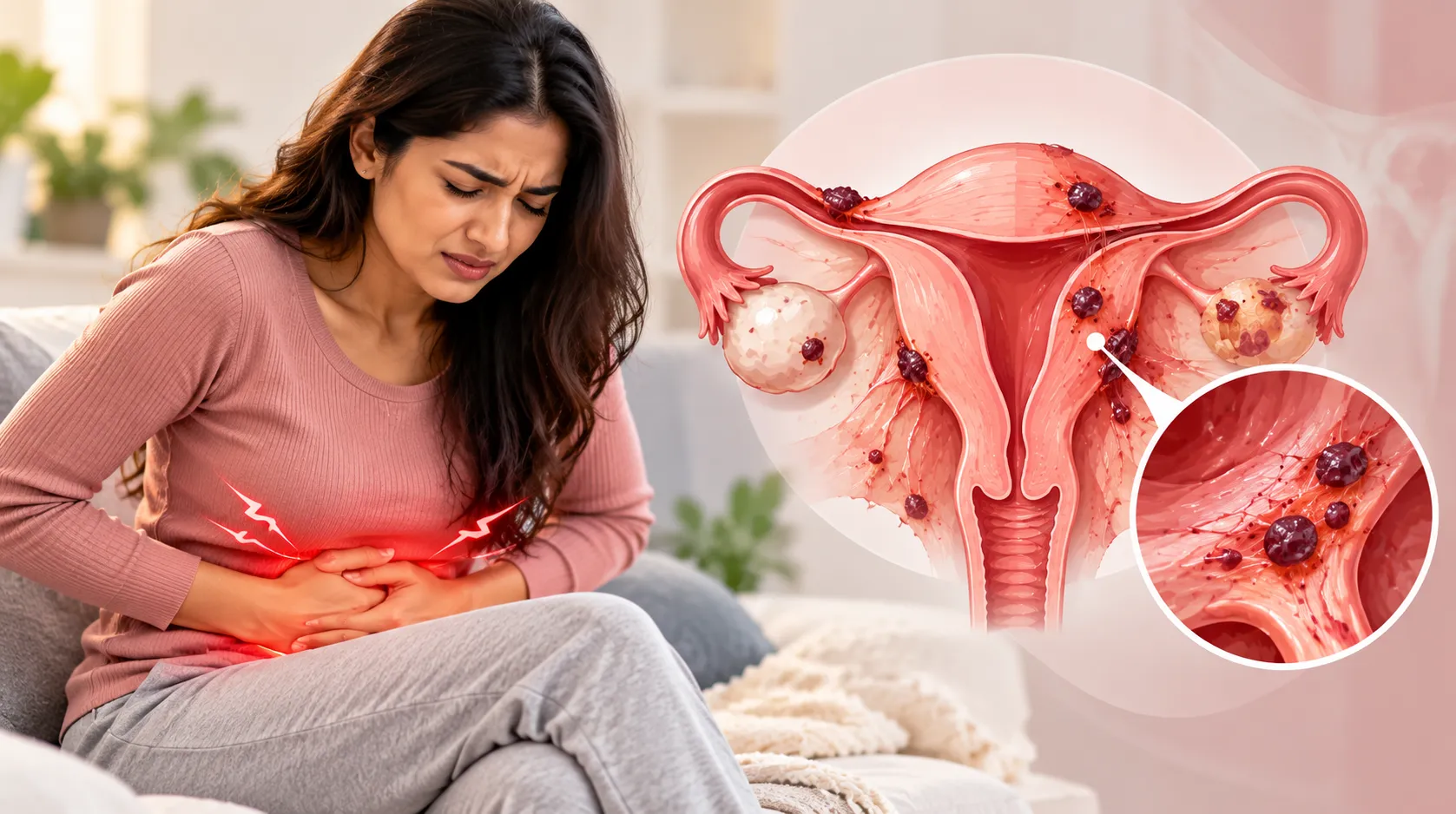
Period pain is common, but when menstrual cramps become so intense that they interfere with work, sleep, daily activities or personal life, they should not be ignored.
Some women experience mild discomfort during menstruation, while others struggle with severe pelvic pain, nausea, fatigue or pain that begins several days before their period.
One possible cause of unusually painful periods is endometriosis, a chronic gynecological condition that can affect women during their reproductive years.
But how exactly does endometriosis cause severe period pain? How can you distinguish ordinary menstrual cramps from symptoms that may indicate endometriosis?
Understanding this connection can help you recognise concerning symptoms and make informed decisions about seeking medical evaluation.
Can Endometriosis Cause Severe Period Pain?
Yes. Endometriosis can cause severe period pain, medically known as dysmenorrhea. It is one of the commonly reported symptoms of the condition.
Endometriosis occurs when tissue similar to the lining of the uterus (endometrium) grows outside the uterus. These growths, called endometriotic lesions, may develop on the ovaries, fallopian tubes, pelvic lining and other nearby structures.
The lesions can contribute to inflammation, irritation of surrounding tissues and changes in pain signalling.
As a result, women with endometriosis may experience:
- Severe menstrual cramps that interfere with daily activities.
- Pelvic pain beginning before menstruation.
- Pain that continues throughout the menstrual period.
- Lower back or abdominal pain during periods.
- Pain during bowel movements or urination, particularly around menstruation.
- Persistent pelvic pain even outside the menstrual cycle.
However, not every woman with endometriosis experiences severe pain. Some have mild symptoms or no noticeable symptoms at all.
Important: The severity of menstrual pain does not always reflect the extent of endometriosis. Even relatively limited disease can be associated with significant pain.
Why Does Endometriosis Cause Severe Period Pain?
Endometriosis-related menstrual pain involves several biological processes, including inflammation, nerve sensitivity and changes in pelvic tissues.
1. Inflammation Around Endometriotic Lesions
Endometriotic lesions can trigger inflammatory responses in surrounding pelvic tissues.
During menstruation, hormonal changes may influence the activity of these lesions and the inflammatory environment.
Inflammatory substances can irritate nearby tissues and contribute to pelvic discomfort.
This is one reason women with endometriosis may experience pain that is more intense or prolonged than typical menstrual cramps.
2. Increased Prostaglandin Activity
Prostaglandins are naturally occurring substances involved in uterine contractions during menstruation.
Higher prostaglandin activity can contribute to stronger uterine contractions and menstrual pain.
Inflammatory processes associated with endometriosis may further contribute to painful periods.
However, prostaglandins also play a role in ordinary menstrual cramps, so severe cramps alone cannot confirm endometriosis.
3. Irritation and Increased Sensitivity of Pelvic Nerves
Endometriosis can affect how pain signals are generated and processed.
Inflammation and changes in nerve activity around endometriotic lesions may increase sensitivity to pain.
Over time, some women develop heightened pain sensitivity, meaning discomfort may continue even when there is no direct relationship between the amount of visible disease and the severity of symptoms.
This can help explain why some women experience persistent pelvic pain outside menstruation.
4. Scar Tissue and Pelvic Adhesions
In some cases, endometriosis is associated with adhesions, which are bands of scar-like tissue that can cause pelvic organs to become attached to one another.
Adhesions may contribute to restricted organ movement and pelvic discomfort.
Pain may become noticeable during menstruation, sexual intercourse or certain physical activities.
However, adhesions do not explain all endometriosis-related pain, and their presence does not always correspond to symptom severity.
5. Deep Endometriosis Affecting Nearby Organs
Deep endometriosis can involve tissues beneath the pelvic lining and may affect structures near the bowel, bladder or pelvic nerves.
Depending on the location, women may experience severe menstrual pain alongside symptoms such as painful bowel movements, urinary discomfort or pain during intercourse.
These symptoms require careful assessment because other gynecological and non-gynecological conditions can produce similar complaints.
Endometriosis Period Pain vs. Normal Period Cramps
Ordinary menstrual cramps, also called primary dysmenorrhea, are generally related to uterine contractions during menstruation.
Endometriosis-related pain is a form of secondary dysmenorrhea, meaning the pain is associated with an underlying medical condition.
Although symptoms can overlap, certain patterns may raise suspicion of endometriosis.
| Feature | Typical Menstrual Cramps |
Possible Endometriosis-Related Pain
|
| Pain intensity | Often mild to moderate, but can be severe | May be severe or disabling |
| Timing | Usually begins shortly before or during menstruation |
May begin several days before menstruation
|
| Duration | Often improves within the first few days |
May persist throughout the period or beyond
|
| Effect on daily life | May cause temporary discomfort |
Can interfere significantly with routine activities
|
| Pain outside periods | Less typical | May occur |
| Other symptoms | Cramps, nausea or loose stools |
May include painful intercourse, bowel symptoms or chronic pelvic pain
|
These differences are not diagnostic. Severe primary dysmenorrhea can occur without endometriosis, and women with endometriosis may have relatively mild menstrual symptoms.
A medical evaluation is needed to determine the underlying cause.
What Are the Warning Signs of Endometriosis-Related Period Pain?
Severe menstrual pain deserves attention, particularly when it is persistent, worsening or associated with other symptoms.
Consider discussing your symptoms with a gynecologist if you experience:
- Period pain that disrupts daily activities: Cramps regularly prevent you from attending work, school or normal activities.
- Pain that starts before menstruation: Pelvic discomfort begins several days before bleeding and continues during the period.
- Pain that is getting progressively worse: Menstrual pain becomes more difficult to manage over time.
- Pain during sexual intercourse: Particularly deep pelvic pain during or after intercourse.
- Painful bowel movements or urination: Especially when symptoms worsen around menstruation.
- Chronic pelvic pain: Pain occurs at other times during the month.
- Difficulty conceiving: Endometriosis may be associated with infertility in some women.
Heavy menstrual bleeding or spotting may also occur, although these symptoms are not specific to endometriosis.
Seek urgent medical care for sudden, severe pelvic pain, especially when accompanied by fainting, fever, persistent vomiting, pregnancy or possible pregnancy. These symptoms may indicate another condition requiring immediate assessment.
Does Severe Period Pain Always Mean You Have Endometriosis?
No. Severe menstrual pain does not automatically mean a woman has endometriosis.
Several conditions can cause painful periods, including:
- Primary dysmenorrhea.
- Adenomyosis.
- Uterine fibroids.
- Pelvic inflammatory disease.
- Certain ovarian cysts.
- Other pelvic or gastrointestinal conditions.
Adenomyosis, for example, occurs when tissue similar to the uterine lining is present within the muscular wall of the uterus. It can cause severe menstrual cramps and heavy bleeding.
Because symptoms overlap, diagnosing endometriosis based on pain intensity alone is not reliable.
The pattern of symptoms, medical history, examination findings and appropriate investigations help guide diagnosis.
How Is Endometriosis Diagnosed in Women With Severe Period Pain?
A gynecologist typically begins by understanding the patient’s symptoms and menstrual history.
The evaluation may include the following steps.
Medical History and Symptom Assessment
Your doctor may ask:
- When did your severe period pain begin?
- Does the pain start before menstruation?
- How many days does it last?
- Does it interfere with your routine?
- Do you experience pelvic pain outside your periods?
- Is there pain during intercourse, urination or bowel movements?
- Have you experienced difficulty conceiving?
- Which medications or treatments have you tried?
Keeping a menstrual pain diary can help identify patterns and explain the severity of symptoms.
Pelvic Examination
A pelvic examination may be offered when clinically appropriate and with the patient’s informed consent.
The doctor may assess for tenderness, masses or other findings that could suggest an underlying pelvic condition.
A normal examination does not rule out endometriosis.
Pelvic Ultrasound
Ultrasound is commonly used to evaluate pelvic structures and identify certain abnormalities.
It may detect ovarian endometriomas, which are cysts associated with endometriosis, and some forms of deep endometriosis.
However, a normal ultrasound does not exclude endometriosis, particularly superficial disease.
MRI Scan
MRI may be recommended in selected cases, especially when deep endometriosis is suspected or additional anatomical information is needed for treatment planning.
It is not necessary for every patient with painful periods.
Laparoscopy
Laparoscopy is a minimally invasive surgical procedure that allows direct examination of the pelvic cavity.
It may be considered when symptoms persist, imaging findings require further assessment or surgical treatment is appropriate.
A biopsy may be taken when indicated.
Not every woman with suspected endometriosis needs laparoscopy for diagnosis. Clinical assessment, imaging and response to medical treatment can guide management without immediate surgery.
How Can Severe Period Pain Caused by Endometriosis Be Managed?
Treatment depends on symptom severity, the suspected or confirmed extent of disease, medical history, response to previous treatment and future pregnancy plans.
There is no single treatment suitable for every woman.
1. Pain-Relieving Medication
Nonsteroidal anti-inflammatory drugs (NSAIDs), such as ibuprofen or naproxen, may help reduce menstrual pain in some patients.
These medications are not appropriate for everyone, particularly those with certain kidney, gastrointestinal or other medical conditions.
They should be used according to medical advice and recommended dosing instructions.
2. Hormonal Treatment
Hormonal medications may help reduce endometriosis-associated menstrual pain by suppressing ovulation, reducing menstrual bleeding or modifying hormonal stimulation.
Depending on the patient’s medical circumstances, options may include:
- Combined hormonal contraceptives.
- Progestin-based treatment.
- Hormonal intrauterine systems.
- Other hormone-suppressing treatments in selected cases.
Hormonal treatment may help control symptoms, but it does not permanently eliminate endometriosis.
The choice of treatment depends on contraindications, side effects, individual preferences and reproductive plans.
3. Laparoscopic Surgery
Laparoscopic surgery may be considered for selected women with persistent pain, certain endometriotic lesions or complications requiring surgical management.
During surgery, endometriotic tissue may be removed or treated where appropriate.
However, surgery is not always necessary, and pain relief is not guaranteed. Symptoms may persist or recur after treatment.
Surgical decisions should also consider potential risks, including injury to surrounding organs, adhesions and possible effects on ovarian reserve when ovarian surgery is involved.
4. Supportive Pain Management
Some women may benefit from additional strategies alongside medical treatment, including:
- Local heat application.
- Appropriate physical activity.
- Pelvic floor physiotherapy when indicated.
- Sleep and stress-management strategies.
- Multidisciplinary pain management for persistent pelvic pain.
These approaches may support symptom management but should not replace evaluation of severe or worsening symptoms.
Can Endometriosis Period Pain Get Worse Over Time?
For some women, endometriosis-related pain becomes more frequent or severe over time. Others experience relatively stable symptoms or changes in pain intensity.
The progression of symptoms is unpredictable.
Importantly, worsening pain does not necessarily mean the disease has spread or become more extensive.
Changes in inflammation, nerve sensitivity, pelvic floor function and other factors may influence pain.
If menstrual pain becomes increasingly difficult to manage, reassessment can help identify whether the current treatment remains appropriate or whether another condition may be contributing.
Can Endometriosis Cause Pain Even When You Are Not on Your Period?
Yes. Although painful menstruation is a common symptom, endometriosis can also cause pelvic pain outside the menstrual cycle.
Some women experience ongoing lower abdominal discomfort, pain during intercourse or bowel-related symptoms throughout the month.
This may be related to persistent inflammation, nerve sensitisation, pelvic floor dysfunction or other associated pain mechanisms.
Persistent pelvic pain should not automatically be attributed to endometriosis, even in someone with an existing diagnosis. Other potential causes may need assessment.
When Should You Consult a Gynecologist for Severe Period Pain?
Menstrual pain that repeatedly affects your quality of life is a valid reason to seek medical advice.
A gynecological consultation may be particularly useful when:
- Your cramps regularly interfere with work, sleep or daily activities.
- Pain is worsening over successive menstrual cycles.
- Standard pain-relief measures are not providing adequate relief.
- You experience pelvic pain between periods.
- You have painful intercourse or bowel symptoms around menstruation.
- You are concerned about endometriosis or future fertility.
Early assessment may help identify possible causes and guide appropriate symptom management. It does not necessarily mean surgery will be required.
Understanding Specialist Assessment for Endometriosis in Pune
Women experiencing persistent or severe menstrual pain may require assessment by a gynecologist familiar with endometriosis and chronic pelvic pain.
According to his published professional profile, Dr. Balaji Nalwad Reddy, a consultant gynecologist and laparoscopic and robotic surgeon in Pune, has more than 23 years of clinical experience. His areas of practice include endometriosis management, gynecological laparoscopy, hysteroscopy and fertility-related procedures.
An individual consultation can help determine whether symptoms suggest endometriosis, whether investigations are indicated and which management options may be appropriate.
The decision to use medication, observation or surgery should be based on clinical findings, patient preferences and a discussion of potential benefits and risks.
Frequently Asked Questions About Endometriosis and Severe Period Pain
Is unbearable period pain a symptom of endometriosis?
Severe menstrual pain can be a symptom of endometriosis, particularly when it repeatedly disrupts daily activities or occurs alongside pelvic pain, painful intercourse or bowel symptoms. However, other conditions can also cause severe cramps.
How painful are periods with endometriosis?
Pain severity varies considerably. Some women experience mild discomfort, while others have severe cramps that interfere with normal activities. The intensity of pain does not reliably indicate the extent of endometriosis.
Can endometriosis cause severe cramps before your period starts?
Yes. Endometriosis-associated pelvic pain may begin several days before menstrual bleeding and continue during or after the period.
Can you have endometriosis with a normal ultrasound?
Yes. Ultrasound can identify some forms of endometriosis, including ovarian endometriomas and certain deep lesions, but it may not detect superficial disease. A normal scan does not rule out endometriosis.
Does endometriosis pain go away after menstruation?
For some women, pain improves when menstruation ends. Others experience pelvic pain at different points in their cycle or throughout the month.
Can severe endometriosis period pain affect fertility?
Endometriosis can be associated with fertility difficulties in some women, but pain severity does not reliably predict fertility outcomes. Many women with endometriosis conceive naturally. Fertility assessment depends on individual circumstances.
Is surgery necessary for severe endometriosis period pain?
Not always. Many women can initially be managed with medication and other appropriate treatments. Surgery may be considered in selected cases based on symptoms, imaging findings, response to treatment and reproductive goals.
Conclusion
Endometriosis can cause severe period pain, but not every painful menstrual cycle is caused by endometriosis.
Inflammation, increased pain sensitivity and changes in pelvic tissues can contribute to menstrual cramps that are more intense, prolonged or disruptive than usual.
Severe or worsening period pain should not be dismissed as something women must simply tolerate. A gynecological assessment can help identify possible causes and guide appropriate treatment.
Understanding the symptoms and available management options is an important step toward making informed decisions about menstrual and reproductive health.
Medical disclaimer: This article is intended for general educational purposes only and does not replace personalised medical advice, diagnosis or treatment.
