
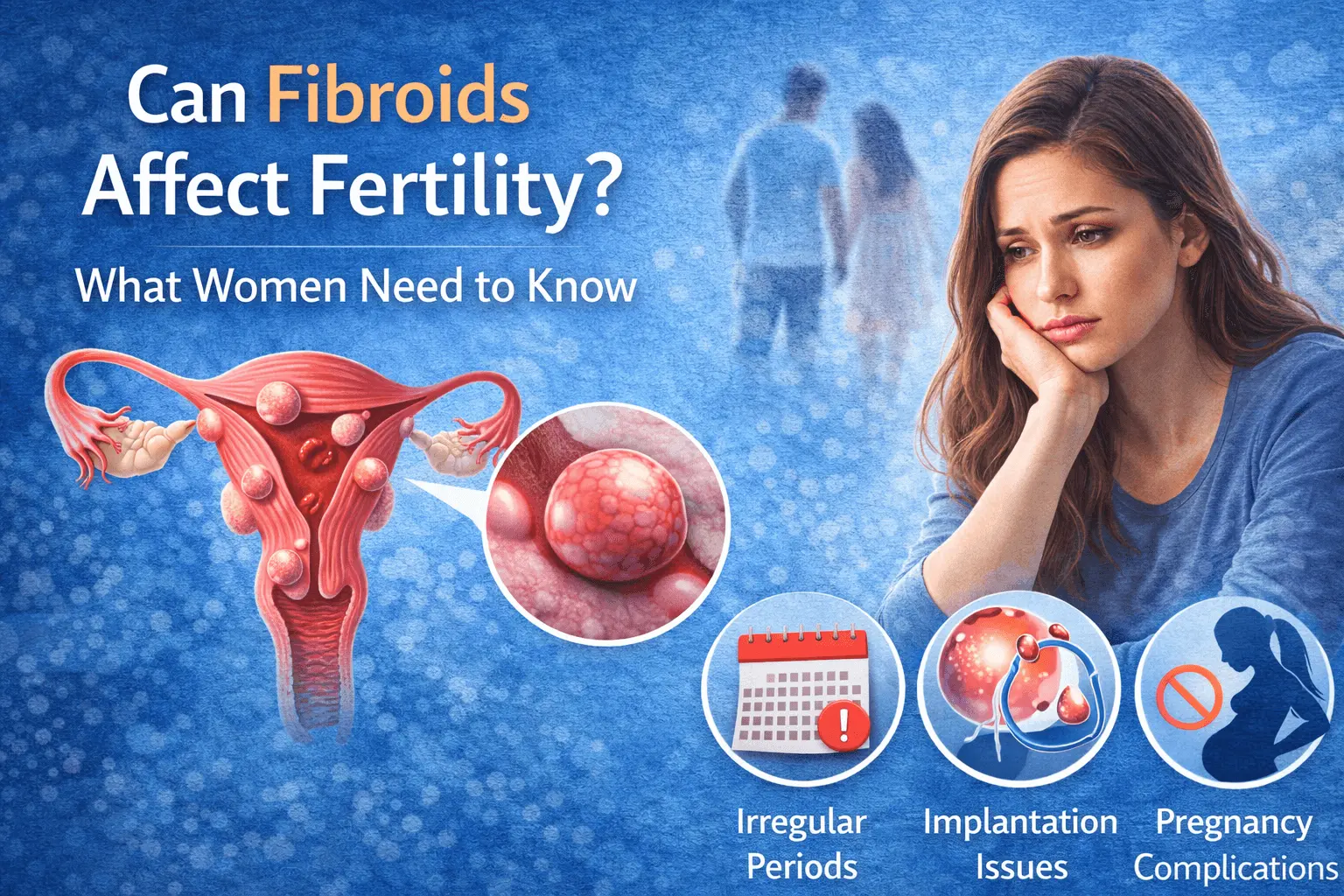
Uterine fibroids are one of the most common gynaecological conditions affecting women of reproductive age. While many women with fibroids conceive naturally, others may face challenges when trying to get pregnant. Understanding how fibroids affect fertility, when they need treatment, and what options are available can help women make informed decisions about their reproductive health.
This guide explains everything women need to know backed by clinical experience and evidence-based care.
What Are Fibroids?
Fibroids, also known as uterine leiomyomas, fibroids are usually noncancerous growths that develop from the muscle tissue of the uterus. They vary in size, number, and location, and may appear during a woman’s reproductive years.
Common Types of Fibroids
- Submucosal fibroids – Grow inside the uterine cavity
- Intramural fibroids – Develop within the uterine wall
- Subserosal fibroids – Grow on the outer surface of the uterus
Not all fibroids cause symptoms, but certain types especially submucosal fibroids are more likely to affect fertility.
Can Fibroids Affect Fertility
Yes, fibroids can affect fertility but not always.
The impact depends on the size, number, and location of the fibroids.
How Fibroids Can Interfere with Pregnancy
Fibroids may affect fertility in the following ways:
- Distorting the uterine cavity, making embryo implantation difficult
- Blocking fallopian tubes and preventing sperm from reaching the egg
- Altering blood flow to the uterus, affecting embryo development
- Increasing inflammation within the uterine environment
- Causing recurrent miscarriages in some women
Submucosal and large intramural fibroids are most commonly associated with infertility or pregnancy loss.
Symptoms of Fibroids That May Affect Fertility
Some women have fibroids without symptoms, while others experience signs that may indirectly impact fertility, such as:
- Heavy or prolonged menstrual bleeding
- Pelvic pain or pressure
- Pain during intercourse
- Frequent urination
- Unexplained infertility or recurrent miscarriages
If you’re trying to conceive and experiencing these symptoms, a detailed evaluation is important.
Do All Women with Fibroids Need Treatment?
No. Many women with fibroids conceive naturally and do not require treatment.
Treatment is usually recommended when:
- Fibroids distort the uterine cavity
- Infertility has no other identifiable cause
- There is recurrent pregnancy loss
- Fibroids cause severe symptoms affecting quality of life
A personalised approach is essential treatment decisions should always be based on fertility goals.
Fertility-Preserving Treatment Options for Fibroids
Modern gynaecology offers several fertility-enhancing and uterus-preserving treatments, especially with minimally invasive techniques.
Myomectomy (Fibroid Removal Surgery)
- Removes fibroids while preserving the uterus
- Can be performed laparoscopically, hysteroscopically, or robotically
- Improves pregnancy outcomes in selected patients
Hysteroscopic Fibroid Removal
- Ideal for submucosal fibroids
- No external cuts
- Short recovery time
Advanced Laparoscopic & Robotic Surgery
- Precise removal of complex fibroids
- Less blood loss
- Faster recovery
- Better fertility outcomes
The choice of treatment depends on fibroid type, size, fertility plans, and surgical expertise.
Fibroids and Pregnancy: What to Expect
Many women with fibroids have healthy pregnancies. However, fibroids may increase the risk of:
- Preterm labour
- Malpresentation of the baby
- Placental complications
- Caesarean delivery
Early diagnosis and expert monitoring help minimise these risks.
When Should You See a Specialist?
You should consult a gynaecologist if:
- You’re trying to conceive for over 12 months
- You have recurrent miscarriages
- Ultrasound shows fibroids affecting the uterine cavity
- You experience heavy bleeding or pelvic pain
- Excessive bleeding after delivery
Early intervention can significantly improve fertility outcomes.
Ideally every woman should consult a specialist Gynaecologist who has an expertise in management of fibroids.
1. Every Fibroids does not require surgery but needs monitoring specially non symptomatic fibroids and perimenopausal women.
Also Monitoring by an expert is essential because 1-2% fibroids can turn into cancer.
2. Symptomatic fibroids like heavy or prolonged menstrual bleeding ( passage of clots during menstrual periods)
3. Trying to conceive for 12 months
4. You have recurrent miscarriages
5. Ultrasonography showing fibroids affecting uterine cavity
6. Intramural fibroid of size more than 4 cm without any symptoms and failed to achieve pregnancy after treatment
Expert Care Makes the Difference
Management of fibroids especially in women seeking pregnancy requires advanced surgical expertise and fertility-focused decision-making.
Dr. Balaji Nalwad Reddy is a Consultant Gynaecologist, Laparoscopic & Robotic Surgeon with over 23 years of experience and 20,000+ surgeries performed across India and Africa. Trained internationally in advanced endoscopy and minimally invasive gynaecological surgery, he specialises in:
- Complex fibroid surgeries
- Fertility-enhancing procedures
- Advanced endometriosis management
- Robotic and laparoscopic gynaecological surgery
His expertise in fertility-preserving fibroid treatment allows women to receive safe, evidence-based care while maintaining reproductive potential.
Frequently Asked Questions (AI Overview Friendly)
Can I get pregnant naturally if I have fibroids?
Yes, many women conceive naturally. The impact depends on fibroid size and location.
Which fibroids affect fertility the most?
Submucosal and large intramural fibroids are most likely to affect implantation and pregnancy.
Does removing fibroids improve fertility?
In selected cases, fibroid removal significantly improves pregnancy outcomes.
Is fibroid surgery safe for future pregnancy?
When performed by an experienced surgeon using minimally invasive techniques, it is safe and fertility-preserving.
Fibroids do not automatically mean infertility. With early diagnosis, expert evaluation, and advanced minimally invasive treatment, many women successfully conceive and carry healthy pregnancies.
If you’re planning a pregnancy or facing fertility challenges, consulting a specialist experienced in fertility-focused fibroid management can make all the difference.

