
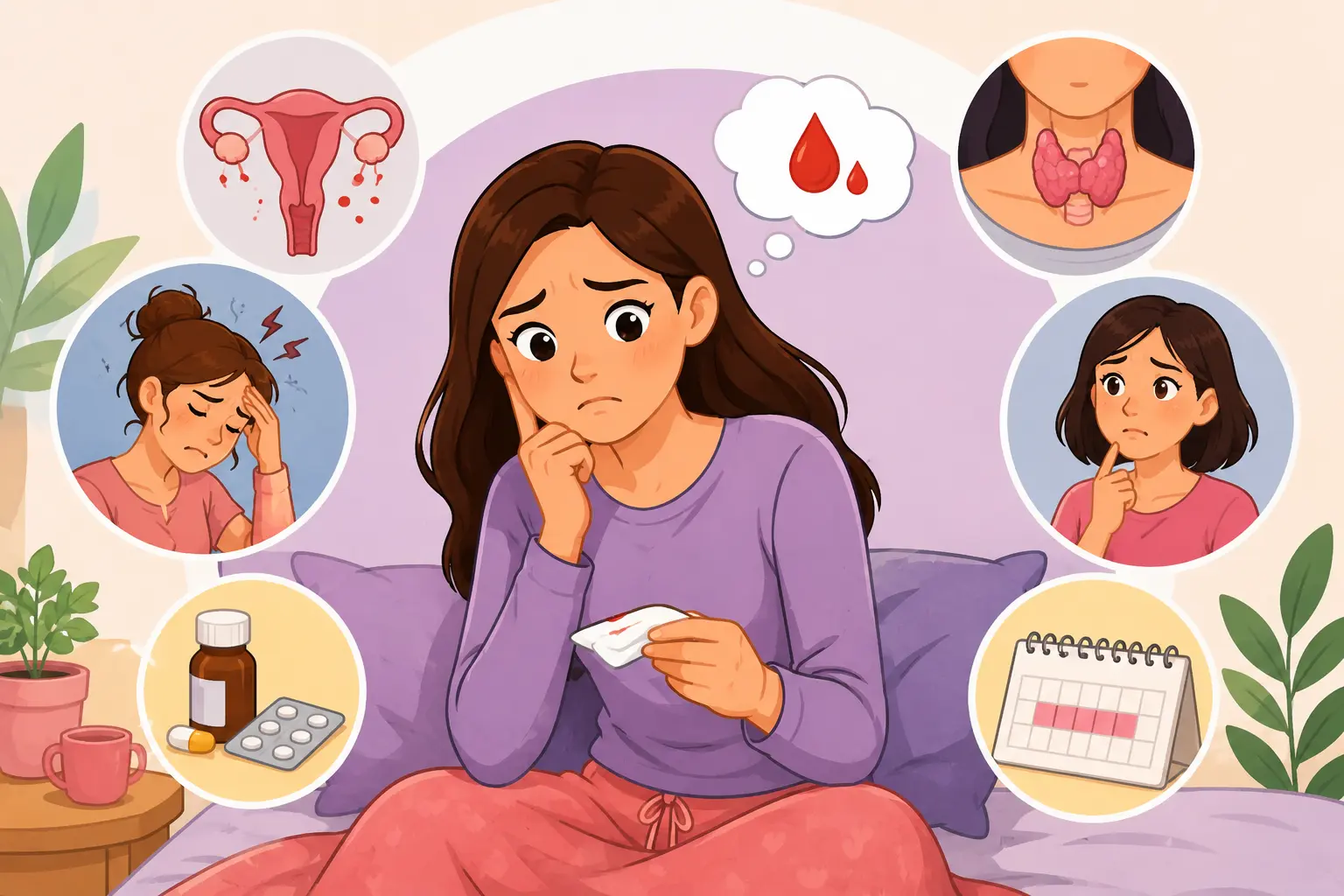
Many women become worried when their period seems to continue for days or even weeks, but the bleeding is very light. It may not be heavy enough to soak pads quickly, yet it just doesn’t seem to stop.
If you’ve ever wondered, “Why my period won’t stop but it’s light?”, you are not alone.
This is one of the most common concerns women discuss during gynecology consultations in Pune. Light but prolonged bleeding may seem harmless, but in many cases, it can signal hormonal imbalance, uterine issues, infections, or other underlying gynecological conditions.
Understanding the reason behind this abnormal bleeding is important because early diagnosis can prevent bigger health concerns later.
At Dr. Balaji Nalwad Reddy clinic in Pune, women receive expert care for irregular periods, abnormal uterine bleeding, fibroids, PCOS, endometriosis, infertility, and advanced gynecological conditions.
Is It Normal for a Period to Last Too Long?
A normal menstrual cycle usually lasts between 3 to 7 days.
The bleeding may start heavy and gradually become lighter, which is completely normal. However, if your bleeding continues beyond 7 days, even if it is light spotting, it may be considered abnormal uterine bleeding (AUB).
This is especially important if:
- It happens frequently
- Your cycle becomes unpredictable
- Spotting continues between periods
- You notice pain, weakness, or unusual discharge
- Your periods have changed suddenly
Persistent light bleeding should not be ignored.
Common Reasons Why Your Period Won’t Stop But It’s Light
There are several possible causes behind prolonged light bleeding.
Let’s understand the most common ones.
1. Hormonal Imbalance
Hormones control your menstrual cycle.
When hormones like estrogen and progesterone become imbalanced, your uterine lining may shed slowly instead of completing a normal period. This can lead to continuous light spotting for days or weeks.
Hormonal imbalance is common in:
- Teenagers
- Women nearing menopause
- Women with thyroid disorders
- Women under high stress
- Sudden weight gain or weight loss cases
2. PCOS (Polycystic Ovary Syndrome)
PCOS is one of the leading causes of irregular periods in women.
It affects ovulation, causing delayed periods, missed cycles, or prolonged light bleeding.
Common signs of PCOS include:
- Irregular periods
- Acne
- Weight gain
- Facial hair growth
- Difficulty conceiving
- Prolonged spotting
3. Uterine Fibroids
Fibroids are non-cancerous growths inside the uterus.
They can cause:
- Heavy periods
- Light but prolonged bleeding
- Pelvic pressure
- Painful periods
- Frequent urination
Many women do not realize fibroids are the reason behind ongoing spotting.
4. Endometrial Polyps
Polyps are small growths in the uterine lining.
They may cause:
- Spotting between periods
- Light continuous bleeding
- Irregular menstrual cycles
- Bleeding after intercourse
Polyps often need ultrasound or hysteroscopy for diagnosis.
5. Birth Control Pills or Hormonal Contraception
Starting or changing birth control pills can cause breakthrough bleeding.
This is common during the first few months and may appear as light but continuous spotting.
Other contraceptive causes include:
- Emergency contraceptive pills
- Hormonal IUCDs
- Injectable contraceptives
6. Pregnancy-Related Spotting
Sometimes women mistake pregnancy spotting for a light period.
This may happen during:
- Implantation bleeding
- Early pregnancy complications
- Miscarriage risk
- Ectopic pregnancy
If your “period” feels unusual and pregnancy is possible, testing is important.
7. Thyroid Problems
Both hypothyroidism and hyperthyroidism can affect periods.
Thyroid disorders may cause:
- Light prolonged bleeding
- Missed periods
- Heavy bleeding
- Fertility issues
Simple blood tests can help identify this.
8. Pelvic Infections
Infections in the reproductive organs can lead to:
- Irregular spotting
- Vaginal discharge
- Pelvic pain
- Fever
- Bad-smelling discharge
Ignoring infections can affect fertility later.
9. Perimenopause
Women approaching menopause often experience irregular bleeding patterns.
This may include:
- Very light periods
- Long-lasting spotting
- Missed periods
- Sudden heavy bleeding
This stage requires proper evaluation to rule out serious conditions.
When Should You See a Gynecologist?
You should consult a gynecologist if:
- Your period lasts more than 7 days
- Light bleeding continues every month
- Spotting happens between periods
- You feel weak or tired
- There is pelvic pain
- Your cycle suddenly changes
- You are trying to conceive
- You experience bleeding after intercourse
- You suspect pregnancy
Early diagnosis helps avoid complications and provides faster relief.
How the Condition is Diagnosed
At Dr. Balaji Nalwad Reddy’s clinic, the diagnosis begins with understanding your cycle pattern, symptoms, and medical history.
Further evaluation may include:
- Pelvic examination
- Ultrasound scan
- Hormonal profile
- Thyroid function test
- Pregnancy test
- Pap smear
- Hysteroscopy
- Laparoscopy if needed
With over 23+ years of experience and more than 20,000 successful surgeries, Dr. Balaji provides advanced diagnosis and minimally invasive treatment for complex gynecological problems.
Treatment for Light but Prolonged Periods
Treatment depends on the actual cause.
Medical Management
For hormonal or mild cases:
- Hormonal regulation medicines
- Birth control management
- Thyroid treatment
- Infection treatment
- PCOS management
- Iron supplements if needed
Advanced Surgical Treatment
If fibroids, polyps, endometriosis, or structural issues are present, advanced procedures may be required.
Dr. Balaji Nalwad Reddy specializes in:
- Advanced laparoscopic surgery
- Robotic gynecological surgery
- Hysteroscopy
- Fibroid removal surgery
- Endometriosis treatment
- Fertility-preserving procedures
- Complex infertility surgeries
His minimally invasive approach helps patients recover faster with better long-term outcomes.
Why Women in Pune Trust Dr. Balaji Nalwad Reddy
Women choose Dr. Balaji because of:
- 23+ years of experience
- 20,000+ surgeries performed
- Expertise in laparoscopic and robotic surgery
- Advanced treatment for fibroids, PCOS, and endometriosis
- Fertility-focused care
- International surgical training
- Honest and patient-first consultation approach
He is trusted for handling even the most complex gynecological conditions with precision and compassionate care.
Can Light Continuous Bleeding Affect Fertility?
Yes, especially if the cause is:
- PCOS
- Endometriosis
- Fibroids
- Polyps
- Hormonal imbalance
- Pelvic infections
Ignoring irregular bleeding for months can delay treatment and impact pregnancy planning.
Early consultation improves reproductive health and fertility outcomes.
Final Thoughts
If your period won’t stop but it’s light, your body may be trying to tell you something important.
Not every case is serious, but ongoing spotting should never be ignored.
Whether the cause is hormonal imbalance, PCOS, fibroids, thyroid issues, or early pregnancy concerns, timely diagnosis is the key.
Getting expert gynecological care can protect your health, fertility, and peace of mind.
Book Your Consultation in Pune
If you are experiencing prolonged light bleeding, irregular periods, spotting between cycles, or abnormal uterine bleeding, consult Dr. Balaji Nalwad Reddy today.
Take control of your menstrual health with expert diagnosis and advanced treatment.
Healthy periods are an important sign of overall women’s health.

