
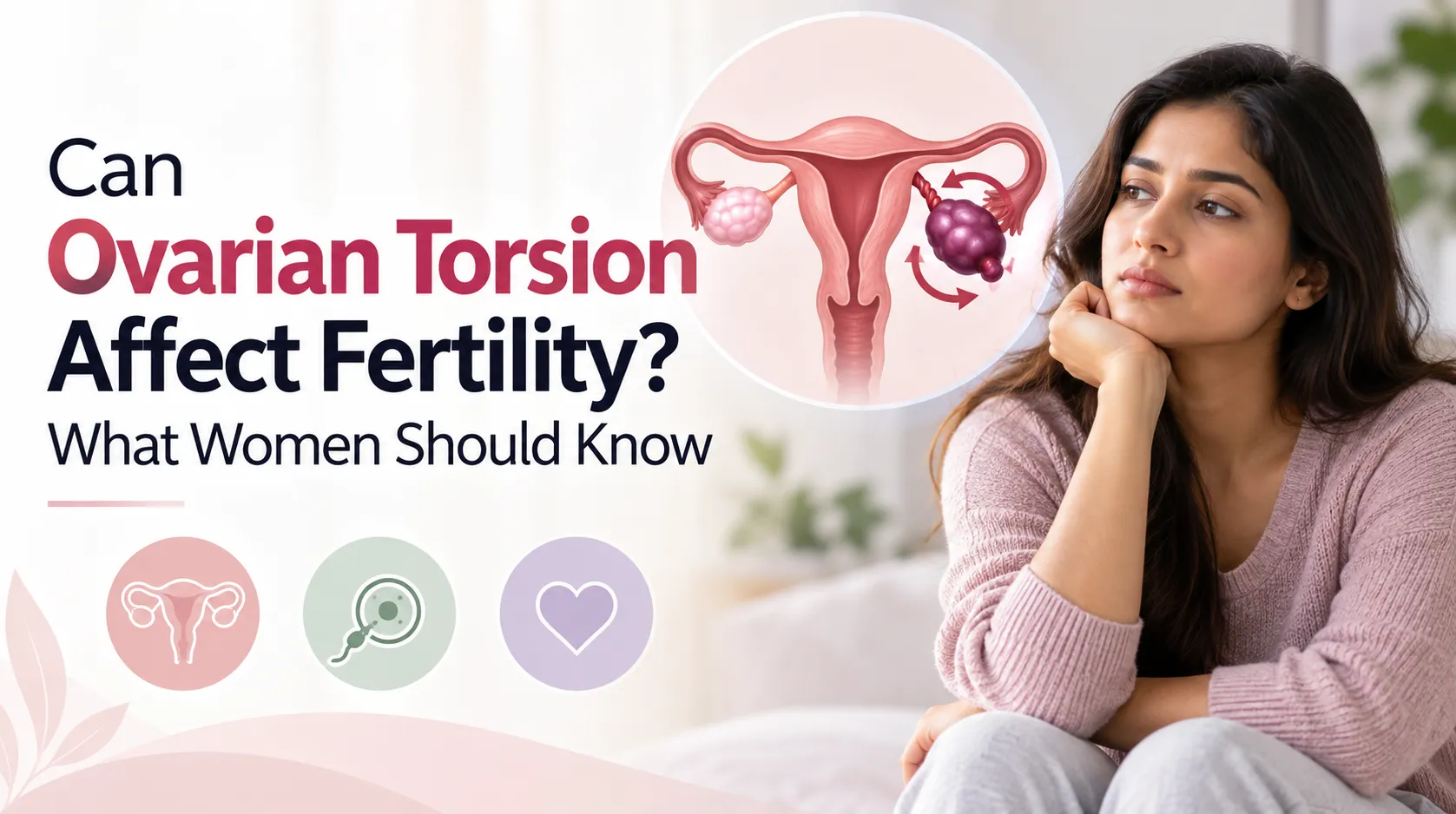
Ovarian torsion is a sudden gynecological condition that can cause severe pelvic pain and requires prompt medical attention. It occurs when an ovary twists around the tissues supporting it, potentially reducing or cutting off its blood supply.
One of the biggest concerns for women diagnosed with ovarian torsion is whether it can affect their ability to become pregnant in the future.
The answer depends on several factors, including how quickly the torsion is treated, whether the ovary can be preserved, the health of the other ovary, and the underlying reason for the torsion.
Understanding these factors can help women make informed decisions about treatment and fertility preservation.
What Is Ovarian Torsion?
Ovarian torsion, also called adnexal torsion, occurs when an ovary twists around its supporting ligaments. The fallopian tube may twist along with the ovary.
This twisting can restrict blood flow to and from the ovary. If the blood supply remains compromised, ovarian tissue can become damaged.
Ovarian torsion can happen at any age but is more likely when an ovary is enlarged because of a cyst, tumor, or another condition.
Can Ovarian Torsion Affect Fertility?
Yes, ovarian torsion can potentially affect fertility, but it does not necessarily cause infertility.
If the affected ovary is treated quickly and preserved, many women can continue to have normal reproductive function.
Even when one ovary has to be removed, the remaining healthy ovary can often continue releasing eggs and producing reproductive hormones.
The effect on fertility depends on:
- Whether the affected ovary is preserved
- The amount of ovarian tissue damaged
- Whether one or both ovaries are affected
- The health of the remaining ovary
- Fallopian tube health
- Age and ovarian reserve
- The underlying cause of the torsion
This is why early diagnosis and treatment are particularly important for women who want to preserve their fertility.
How Does Ovarian Torsion Affect the Ovary?
When an ovary twists, its blood vessels may become compressed.
Initially, blood flow may be partially restricted. If the twisting continues, blood supply can become severely compromised.
Prolonged loss of blood flow can result in:
- Ovarian tissue damage
- Reduced ovarian function
- Tissue death
- Loss of the affected ovary in severe cases
The longer the ovary remains twisted, the greater the concern for permanent damage.
Can the Ovary Be Saved?
In many cases, doctors attempt to preserve the ovary, particularly in women of reproductive age.
During surgery, the surgeon may untwist the ovary and restore its blood supply. If the tissue appears capable of recovering, the ovary may be left in place and monitored.
The appearance of an ovary during surgery does not always reliably predict how well it will recover. Therefore, ovarian preservation may be considered whenever it is medically appropriate.
What Happens If One Ovary Has to Be Removed?
Losing one ovary does not automatically mean you cannot become pregnant.
The remaining ovary may continue to:
- Release eggs
- Produce reproductive hormones
- Support natural ovulation
However, fertility depends on the overall health of the reproductive system.
Women who have concerns about future fertility after ovarian surgery should discuss their individual situation with a gynecologist.
Can Ovarian Torsion Reduce Ovarian Reserve?
Ovarian reserve refers to the remaining supply of eggs in the ovaries.
If ovarian tissue is significantly damaged or an ovary needs to be removed, the overall ovarian reserve may be affected.
The impact varies from woman to woman and depends on factors such as:
- Age
- Existing ovarian reserve
- Whether one or both ovaries are affected
- Severity of the torsion
- Extent of ovarian surgery
If fertility is an important concern, your doctor may recommend appropriate ovarian reserve testing after treatment.
What Causes Ovarian Torsion?
Ovarian torsion is often associated with an enlarged or heavier ovary.
Common risk factors include:
- Ovarian cysts
- Benign ovarian tumors
- Enlarged ovaries
- Polycystic ovaries
- Fertility treatment
- Pregnancy
- Previous ovarian torsion
Sometimes, however, torsion can occur without an obvious underlying ovarian mass.
Identifying and treating the underlying cause can help reduce the risk of future problems.
What Are the Warning Signs of Ovarian Torsion?
Ovarian torsion commonly causes sudden pelvic or lower abdominal symptoms.
Warning signs include:
- Sudden severe pelvic pain
- Pain predominantly on one side
- Nausea
- Vomiting
- Abdominal tenderness
- Pelvic pressure
- Pain that comes and goes
Some women experience intermittent pain when the ovary twists and partially untwists.
Importantly, temporary improvement does not mean the problem has resolved safely.
Is Ovarian Torsion an Emergency?
Yes. Suspected ovarian torsion requires urgent medical evaluation.
A twisted ovary can have its blood supply compromised, and prolonged restriction can cause permanent tissue damage.
If you develop sudden, severe one-sided pelvic pain, particularly with nausea or vomiting, seek emergency medical attention rather than waiting for the symptoms to disappear.
How Is Ovarian Torsion Diagnosed?
Doctors may use several methods to evaluate suspected ovarian torsion.
Ultrasound
Pelvic ultrasound can help identify:
- Enlarged ovaries
- Ovarian cysts or masses
- Changes in ovarian structure
- Blood flow using Doppler imaging
However, imaging cannot always definitively rule out torsion.
Physical Examination
A gynecologist evaluates the location and severity of pain and checks for abdominal or pelvic tenderness.
Blood and Urine Tests
These tests can help evaluate other potential causes of acute pelvic pain, including infection and pregnancy-related conditions.
Laparoscopy
When torsion is strongly suspected, minimally invasive surgery may be required to confirm the diagnosis and treat the twisted ovary.
What Is the Treatment for Ovarian Torsion?
Treatment generally involves surgery when torsion is suspected.
The primary goals are to:
- Untwist the ovary
- Restore blood flow
- Preserve healthy ovarian tissue
- Treat the underlying cause
- Reduce the risk of recurrence
Laparoscopic Detorsion
Laparoscopic surgery uses small abdominal incisions and specialized instruments to access the ovary.
The surgeon can untwist the ovary and assess its condition.
Removal of an Ovarian Cyst
If a cyst caused the torsion, the surgeon may remove the cyst while preserving healthy ovarian tissue whenever possible.
Removal of the Ovary
If the ovary is severely damaged or cannot safely be preserved, removal may be necessary.
For women who wish to have children, ovarian preservation is an important consideration whenever medically appropriate.
Can You Get Pregnant After Ovarian Torsion Surgery?
Many women can still become pregnant after treatment for ovarian torsion.
Pregnancy may be possible when:
- At least one healthy ovary remains
- The fallopian tubes are functioning
- The uterus is healthy
- There are no other significant fertility problems
Women who have difficulty conceiving after ovarian torsion should undergo a comprehensive fertility evaluation rather than assuming torsion is the only cause.
Does Ovarian Torsion Happen Again?
Yes, recurrence is possible.
The risk may be higher when an underlying ovarian condition remains or when there are other factors that make the ovary more mobile.
Your gynecologist may discuss strategies to reduce recurrence based on your medical history and the cause of the original torsion.
How Can Women Protect Their Fertility After Ovarian Torsion?
If you have been treated for ovarian torsion and are concerned about fertility, discuss your reproductive plans with your gynecologist.
Depending on your circumstances, your doctor may evaluate:
- Ovarian reserve
- Remaining ovarian function
- Fallopian tubes
- Uterus
- Existing ovarian cysts
- Other causes of infertility
Women who are planning pregnancy should not delay consultation if they have concerns about their reproductive health.
Why Choose Dr. Balaji Nalwad Reddy for Advanced Gynecological Care?
Dr. Balaji Nalwad Reddy is a consultant gynecologist, laparoscopic surgeon, hysteroscopic surgeon, and robotic surgeon in Pune.
He has more than 23 years of clinical experience and has performed 20,000+ gynecological surgeries. His areas of expertise include advanced laparoscopic and robotic gynecological procedures, ovarian surgery, endometriosis management, fertility-enhancing procedures, and complex gynecological conditions.
His international training includes advanced laparoscopic and endoscopic experience in Spain and a Fellowship in Minimal Access Surgery in the USA.
For women concerned about ovarian health and future fertility, an individualized evaluation can help determine the safest treatment and appropriate fertility-preserving approach.
Frequently Asked Questions
Can ovarian torsion cause permanent infertility?
Not necessarily. Ovarian torsion may affect fertility if it causes significant ovarian damage or requires removal of an ovary, but many women can still conceive, particularly when the other ovary is healthy.
Can you get pregnant with one ovary after ovarian torsion?
Yes. One healthy ovary can often continue to release eggs and support natural conception.
Does ovarian torsion affect egg quality?
Ovarian torsion primarily raises concern about ovarian blood supply and tissue damage. Any effect on ovarian function depends on the severity of the torsion and the treatment required.
How quickly should ovarian torsion be treated?
Suspected ovarian torsion should be evaluated urgently because prolonged interruption of blood flow can increase the risk of permanent ovarian damage.
Can ovarian torsion be treated without surgery?
When torsion is suspected, surgery is generally the definitive treatment because the ovary needs to be untwisted and its condition assessed.
Can ovarian torsion happen during pregnancy?
Yes. Pregnancy can be associated with ovarian torsion, particularly when an ovary is enlarged or affected by a cyst. Sudden severe abdominal or pelvic pain during pregnancy requires urgent medical evaluation.
Final Thoughts
Ovarian torsion can affect fertility, but a diagnosis does not automatically mean that future pregnancy is impossible.
The most important factors are early treatment, preservation of healthy ovarian tissue whenever possible, and evaluation of the underlying cause.
If the ovary can be saved, its function may recover. Even when one ovary needs to be removed, the remaining healthy ovary can often maintain reproductive function.
If you experience sudden severe one-sided pelvic pain, especially with nausea or vomiting, seek emergency medical care immediately. Prompt treatment can be critical for protecting ovarian health and future fertility.
