
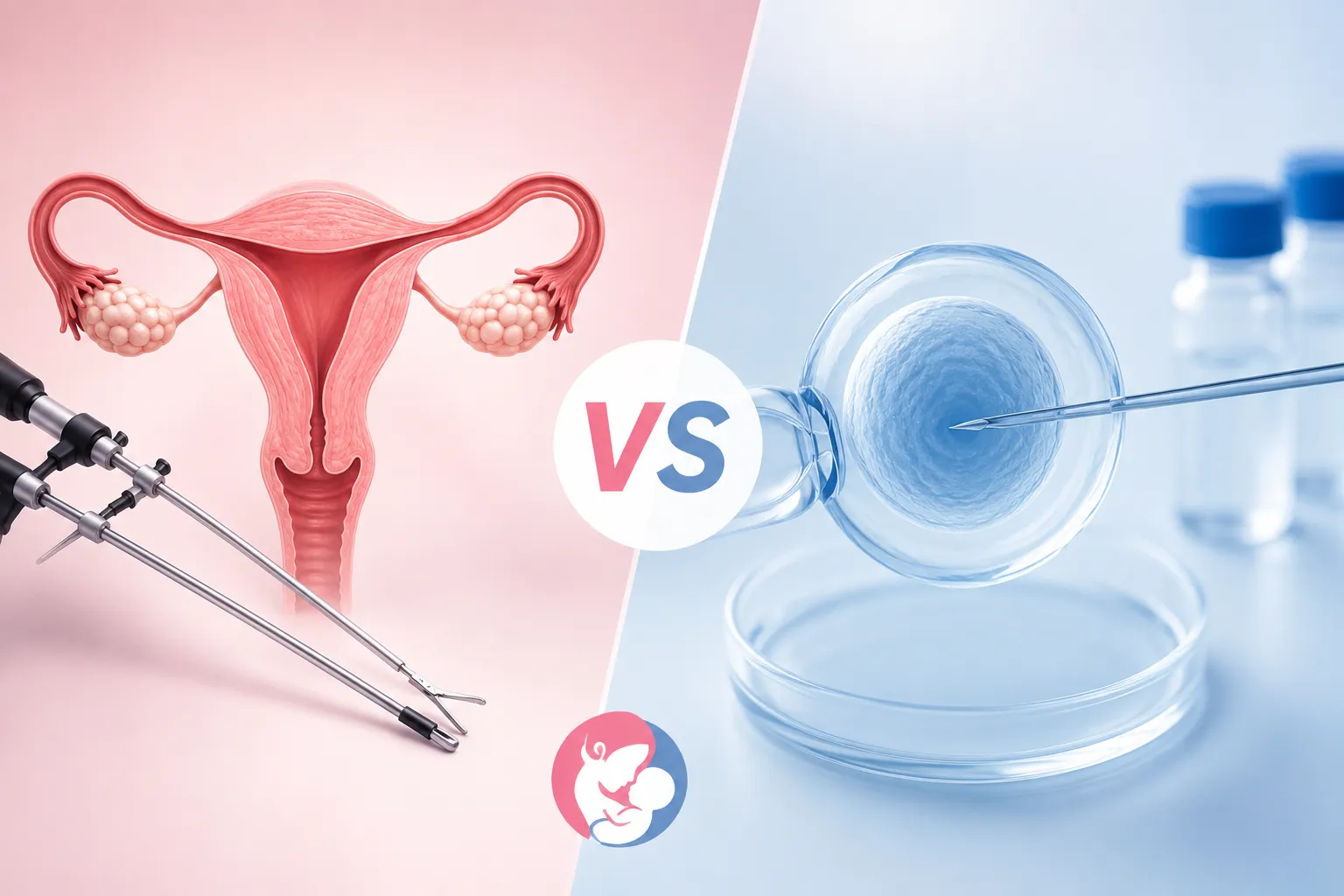
For couples struggling to conceive, one of the biggest questions is whether to choose fertility enhancing surgery or proceed directly with In Vitro Fertilization (IVF).
Many people assume IVF is always the fastest and best option. However, that’s not always true. In many cases, treating the underlying cause of infertility through fertility-enhancing surgery can significantly improve the chances of natural conception and may even eliminate the need for IVF.
The right treatment depends on several factors, including your age, the cause of infertility, previous treatments, ovarian reserve, and overall reproductive health.
If you’re looking for expert guidance on Fertility Enhancing Surgery, understanding the differences between surgery and IVF can help you make an informed decision.
At Dr. Balaji Nalwad Reddy’s clinic in Pune, couples receive comprehensive fertility evaluation and advanced treatment, including fertility-enhancing laparoscopic surgery, hysteroscopy, endometriosis surgery, fibroid removal, tubal reconstruction, and minimally invasive reproductive procedures.
What Is Fertility Enhancing Surgery?
Fertility Enhancing Surgery includes specialized minimally invasive procedures that improve the natural ability to conceive by correcting structural or anatomical problems affecting the reproductive organs.
Instead of bypassing infertility like IVF, fertility surgery aims to restore normal reproductive function.
Common fertility-enhancing procedures include:
- Laparoscopic endometriosis surgery
- Fibroid removal (Myomectomy)
- Ovarian cyst removal
- Hysteroscopic septum resection
- Removal of uterine polyps
- Adhesion removal
- Tubal reconstruction surgery
- Ovarian drilling for selected PCOS patients
The goal is to improve fertility while preserving the uterus, ovaries, and fallopian tubes whenever possible.
What Is IVF?
In Vitro Fertilization (IVF) is an assisted reproductive technique in which eggs are retrieved from the ovaries, fertilized with sperm in a laboratory, and then transferred back into the uterus.
IVF is commonly recommended for:
- Severe male infertility
- Blocked fallopian tubes
- Low ovarian reserve
- Failed fertility treatments
- Unexplained infertility
- Advanced maternal age
Although IVF has helped millions of couples worldwide, it is not always the first or best treatment for every infertility case.
Fertility Surgery vs IVF: What’s the Difference?
| Fertility Enhancing Surgery | IVF |
| Treats the root cause of infertility | Bypasses many infertility problems |
| Can restore natural conception | Pregnancy occurs through assisted reproduction |
| One procedure may improve fertility for years | Every pregnancy usually requires another IVF cycle |
| Preserves reproductive anatomy | Does not correct underlying disease |
| Often recommended for endometriosis, fibroids, polyps, adhesions | Often recommended for severe infertility or failed treatments |
The best option depends on your individual diagnosis rather than a one-size-fits-all approach.
When Is Fertility Enhancing Surgery the Better Choice?
Surgery may be the preferred option when infertility is caused by conditions that can be corrected.
Endometriosis
Endometriosis is one of the leading causes of infertility.
Advanced laparoscopic surgery can remove endometriosis while preserving healthy reproductive organs, improving the chances of natural conception.
Uterine Fibroids
Fibroids that distort the uterine cavity may interfere with implantation or increase miscarriage risk.
Removing selected fibroids through minimally invasive myomectomy may improve fertility.
Uterine Polyps
Even small polyps can affect embryo implantation.
Hysteroscopic removal is usually a simple procedure that may enhance pregnancy outcomes.
Uterine Septum
A uterine septum increases the risk of infertility and recurrent miscarriage.
Hysteroscopic septum correction often improves reproductive outcomes.
Pelvic Adhesions
Scar tissue from previous surgeries, infections, or endometriosis can prevent normal fertilization.
Laparoscopic adhesiolysis helps restore pelvic anatomy.
Certain Tubal Problems
Selected fallopian tube conditions can sometimes be repaired through fertility-preserving surgery instead of proceeding directly to IVF.
When Is IVF a Better Option?
IVF may be recommended when:
- Both fallopian tubes are severely damaged
- Ovarian reserve is significantly reduced
- Severe male factor infertility is present
- Multiple fertility surgeries have already failed
- Maternal age is advanced
- Previous fertility treatments have not been successful
For many couples, IVF remains an excellent treatment option when surgery alone is unlikely to achieve pregnancy.
Can Fertility Surgery Improve IVF Success?
Yes.
Many fertility specialists recommend correcting certain conditions before IVF because doing so may improve implantation rates and pregnancy outcomes.
Examples include:
- Endometriosis surgery
- Fibroid removal
- Polyp removal
- Uterine septum correction
- Adhesion removal
Treating these conditions creates a healthier environment for embryo implantation.
Benefits of Fertility Enhancing Surgery
Compared with immediate IVF, fertility surgery offers several advantages for carefully selected patients.
Benefits include:
- Opportunity for natural conception
- Correction of the underlying cause
- Improved reproductive health
- Better pregnancy outcomes
- Long-term fertility benefits
- Reduced pelvic pain in women with endometriosis
- Preservation of reproductive organs
Many couples successfully conceive naturally after appropriate fertility surgery.
How Do Specialists Decide Between Surgery and IVF?
Choosing the right treatment requires a complete fertility evaluation.
At Dr. Balaji Nalwad Reddy’s clinic, assessment may include:
- Detailed medical history
- Fertility history
- Pelvic examination
- Ultrasound scan
- Hormonal evaluation
- Ovarian reserve testing
- Fallopian tube assessment
- Semen analysis
- Hysteroscopy
- Diagnostic laparoscopy, when indicated
Every treatment plan is personalized according to the couple’s reproductive goals.
Why Choose Dr. Balaji Nalwad Reddy for Fertility Enhancing Surgery?
When fertility depends on surgical expertise, choosing an experienced specialist can make a significant difference.
- Over 23 years of clinical experience
- 20,000+ successful gynecological surgeries
- Fellowship in Minimal Access Surgery
- International training in advanced laparoscopic gynecological surgery
- Expertise in fertility-preserving procedures
- Advanced experience in endometriosis surgery
- Robotic and laparoscopic surgical expertise
- Specialized management of complex infertility cases
His minimally invasive approach focuses on preserving reproductive organs while maximizing the chances of pregnancy.
Frequently Asked Questions
Is fertility surgery better than IVF?
Neither treatment is universally better. Fertility surgery is ideal when infertility is caused by conditions that can be corrected, while IVF is recommended for situations where natural conception is unlikely.
Can I get pregnant naturally after fertility surgery?
Yes. Many women conceive naturally after procedures such as endometriosis surgery, fibroid removal, adhesion removal, or hysteroscopic correction of uterine abnormalities.
Is laparoscopic fertility surgery safe?
Yes. When performed by an experienced laparoscopic gynecological surgeon, fertility-enhancing surgery is generally safe and offers faster recovery, smaller incisions, and less postoperative discomfort.
Should I try surgery before IVF?
It depends on the underlying cause of infertility. After a detailed fertility assessment, your specialist can recommend whether surgery, IVF, or a combination of both offers the best chance of pregnancy.
Final Thoughts
Choosing between fertility surgery and IVF is one of the most important decisions during your fertility journey.
While IVF is an excellent treatment for many couples, it is not always the first step. In women with endometriosis, fibroids, uterine polyps, adhesions, or certain tubal conditions, Fertility Enhancing Surgery may restore natural fertility and improve long-term reproductive health.
The best treatment is one that addresses your specific diagnosis rather than following a standard approach.
Book a Fertility Consultation in Pune
If you’re trying to conceive and wondering whether Fertility Enhancing Surgery or IVF is the right choice, consult Dr. Balaji Nalwad Reddy for a comprehensive fertility evaluation.
With advanced laparoscopic expertise and personalized fertility care, he helps couples choose the most effective treatment based on their individual needs and reproductive goals.

