
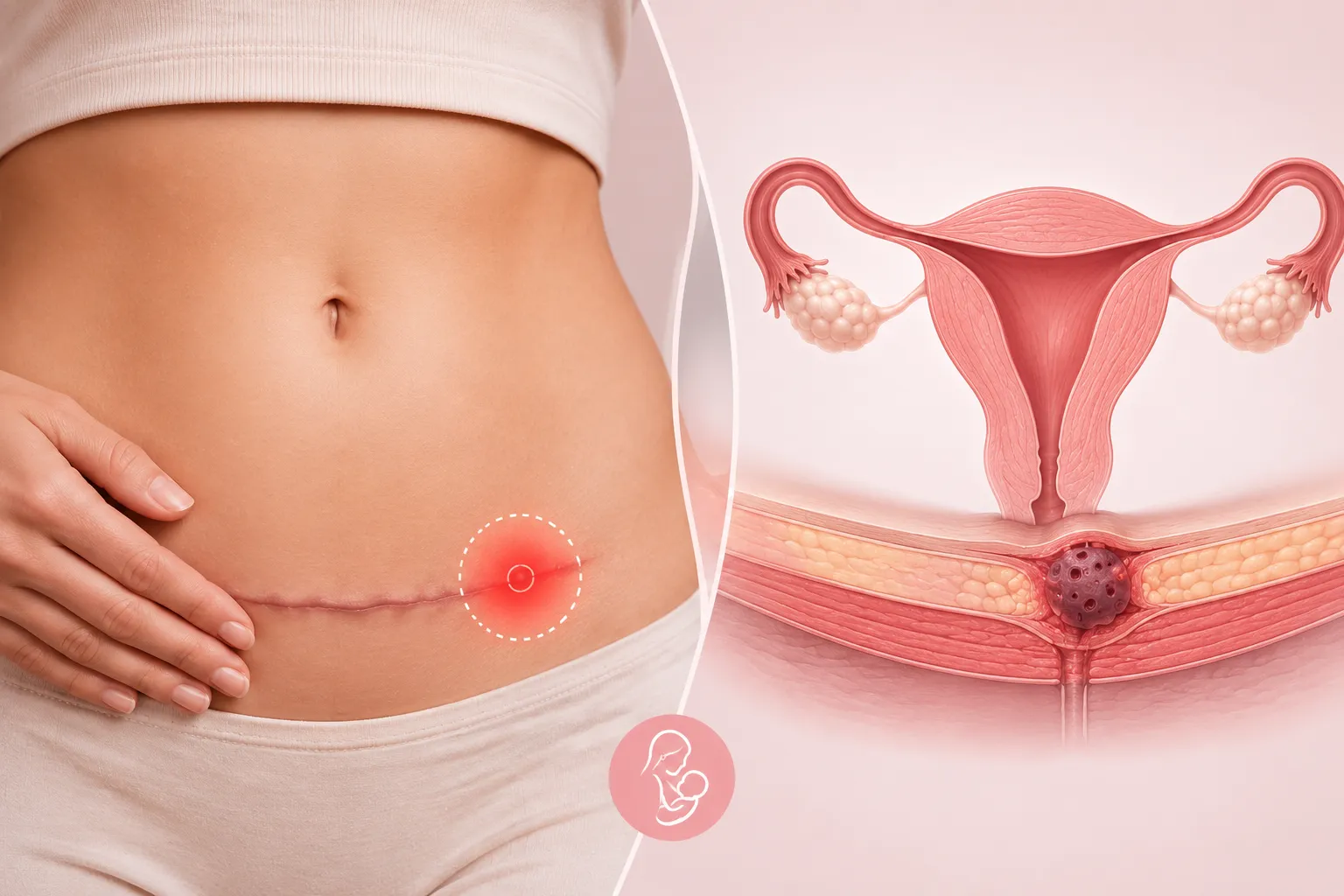
For many women, a C-section is a life-changing experience that brings the joy of motherhood. While most women recover without complications, some continue to experience pain, swelling, or a lump near the surgical scar months or even years after delivery.
These symptoms are often mistaken for normal scar tissue, a hernia, or an infection. However, they could be signs of scar endometriosis, a rare but treatable condition that requires expert evaluation.
Because scar endometriosis is uncommon, many women go undiagnosed for years. Delayed diagnosis can lead to worsening pain, repeated treatments, and unnecessary emotional stress.
If you’re searching for a Scar Endometriosis Specialist, understanding the symptoms and seeking timely treatment can make a significant difference in your recovery and quality of life.
At Dr. Balaji Nalwad Reddy’s clinic in Pune, women receive advanced diagnosis and minimally invasive surgical treatment for scar endometriosis, pelvic endometriosis, infertility, fibroids, and other complex gynecological conditions.
What Is Scar Endometriosis?
Scar endometriosis is a type of extrapelvic endometriosis in which tissue similar to the lining of the uterus (endometrium) grows within or around a previous surgical scar.
It most commonly develops after:
- Cesarean section (C-section)
- Hysterectomy
- Myomectomy (fibroid removal surgery)
- Laparoscopic gynecological surgery
- Other pelvic or abdominal surgeries
Unlike normal scar tissue, these endometrial cells respond to hormonal changes during every menstrual cycle. As a result, they become inflamed, swell, and may bleed internally, causing recurring pain and discomfort.
Although scar endometriosis is rare, it should always be considered when pain or a lump develops near a surgical scar.
What Causes Scar Endometriosis?
The most widely accepted theory is direct implantation of endometrial cells during surgery.
During a C-section, tiny endometrial cells may accidentally come into contact with the abdominal wall incision. Over time, these cells continue to grow under the influence of estrogen, leading to scar endometriosis.
Factors that may increase the risk include:
- Previous cesarean section
- Multiple C-sections
- Previous uterine surgery
- History of endometriosis
- Gynecological surgical procedures
It is important to note that scar endometriosis is not caused by poor wound healing or infection.
Symptoms of Scar Endometriosis
Symptoms often appear months or even years after surgery and usually become more noticeable during menstruation.
Pain Around the C-Section Scar
The most common symptom is persistent pain over or near the surgical scar.
Women often describe the pain as:
- Sharp or stabbing
- Burning sensation
- Deep aching pain
- Tenderness when touched
The pain typically worsens before or during menstruation.
A Lump Beneath the Scar
Many women notice a firm lump under or beside their C-section scar.
The lump may:
- Increase in size during periods
- Become painful before menstruation
- Feel hard or tender
- Remain present throughout the month
A painful lump associated with menstrual cycles is one of the strongest signs of scar endometriosis.
Cyclical Pain Every Month
Unlike ordinary scar pain, scar endometriosis usually follows the menstrual cycle.
Symptoms often:
- Begin a few days before the period
- Become more severe during menstruation
- Improve after the period ends
This repeating monthly pattern is an important clue for diagnosis.
Swelling Near the Scar
Women may also experience:
- Localized swelling
- Skin tightness
- Tenderness
- Inflammation around the scar
Swelling often becomes more noticeable during menstruation.
Bleeding or Discharge from the Scar
Although uncommon, some women experience:
- Bloody discharge
- Brown-colored fluid
- Bleeding directly from the scar during periods
This symptom requires immediate evaluation by a gynecologist.
Scar Endometriosis vs Normal C-Section Scar Pain
Many women wonder whether their symptoms are simply part of normal healing.
| Normal Scar Healing | Scar Endometriosis |
| Improves over weeks | Persists for months or years |
| Mild discomfort | Severe or increasing pain |
| No monthly pattern | Pain worsens during periods |
| No lump | Painful lump under scar |
| Healing progresses normally | Symptoms gradually worsen |
If pain continues long after your C-section and follows your menstrual cycle, it should not be ignored.
Can Scar Endometriosis Be Misdiagnosed?
Yes. Because it is relatively rare, scar endometriosis is often mistaken for:
- Hernia
- Lipoma (fatty lump)
- Stitch granuloma
- Abscess
- Scar tissue
- Soft tissue tumor
- Wound infection
An experienced gynecologist who specializes in endometriosis can differentiate these conditions through proper evaluation and imaging.
When Should You See a Scar Endometriosis Specialist?
Schedule a consultation if you experience:
- Pain near your C-section scar
- A lump beneath the scar
- Swelling that worsens during periods
- Pain months or years after surgery
- Bleeding from the scar
- Pain affecting daily activities
- Symptoms that continue despite medication
Early diagnosis allows for more effective treatment and reduces the risk of ongoing discomfort.
How Is Scar Endometriosis Diagnosed?
At Dr. Balaji Nalwad Reddy’s clinic, diagnosis begins with a detailed review of your symptoms, menstrual history, and previous surgeries.
Depending on your condition, investigations may include:
- Clinical examination
- Pelvic ultrasound
- Abdominal wall ultrasound
- MRI scan
- Fine needle aspiration (selected cases)
- Assessment for pelvic endometriosis
Because scar endometriosis can resemble other conditions, accurate diagnosis is essential before planning treatment.
Best Treatment for Scar Endometriosis
Treatment depends on the size, location, and severity of the disease.
Medical Management
Hormonal medications may temporarily reduce symptoms by suppressing menstrual activity.
However, medicines usually do not remove the endometriotic tissue completely, and symptoms often return once treatment is stopped.
Surgical Removal – The Gold Standard
Complete surgical excision is considered the most effective treatment for scar endometriosis.
The procedure involves:
- Complete removal of the endometriotic tissue
- Excision of affected scar tissue
- Preservation of healthy surrounding tissue
- Reducing the risk of recurrence
When performed by an experienced surgeon, surgery provides excellent long-term relief for most patients.
Can Scar Endometriosis Affect Fertility?
Scar endometriosis itself usually does not directly affect fertility.
However, some women with scar endometriosis may also have pelvic endometriosis, which can involve:
- Ovaries
- Fallopian tubes
- Uterus
- Pelvic organs
Pelvic endometriosis can reduce fertility if left untreated. Therefore, a comprehensive evaluation is often recommended.
Why Choose Dr. Balaji Nalwad Reddy as Your Scar Endometriosis Specialist?
Choosing the right specialist is essential for successful treatment.
With more than 23 years of clinical experience and 20,000+ successful gynecological surgeries, Dr. Balaji Nalwad Reddy is recognized for treating complex gynecological conditions using advanced minimally invasive techniques.
His expertise includes:
- Scar Endometriosis Surgery
- Advanced Endometriosis Excision Surgery
- Robotic Gynecological Surgery
- Laparoscopic Surgery
- Fertility-Preserving Procedures
- Complex Pelvic Reconstruction
- Chronic Pelvic Pain Management
His international training in minimally invasive gynecological surgery and patient-centered approach ensures accurate diagnosis, personalized treatment, and faster recovery.
Frequently Asked Questions
Is scar endometriosis common after a C-section?
No. It is considered a rare complication, but it is becoming more frequently recognized due to increased awareness and improved diagnostic techniques.
How long after a C-section can scar endometriosis develop?
Symptoms may appear within a few months or even several years after the surgery.
Can scar endometriosis be treated without surgery?
Hormonal medications may reduce symptoms temporarily, but complete surgical removal is generally the most effective long-term treatment.
Is scar endometriosis cancer?
No. Scar endometriosis is a benign (non-cancerous) condition. However, it can cause significant pain and should be treated appropriately.
Can scar endometriosis come back after surgery?
Recurrence is uncommon when the affected tissue is completely removed by an experienced endometriosis surgeon.
Final Thoughts
Pain around a previous C-section scar should never be dismissed as “normal” if it continues long after surgery or worsens with every menstrual cycle.
Scar endometriosis is rare, but early diagnosis can prevent years of unnecessary pain and repeated misdiagnosis.
If you notice a painful lump, swelling, or recurring discomfort near your surgical scar, consult a qualified Scar Endometriosis Specialist for expert evaluation and treatment.
Book Your Consultation in Pune
If you’re experiencing pain, swelling, or a lump near your C-section scar, don’t ignore the symptoms.
Consult Dr. Balaji Nalwad Reddy, an experienced laparoscopic and robotic gynecological surgeon in Pune, for expert diagnosis and advanced treatment of scar endometriosis.
Early treatment can help relieve pain, prevent complications, and restore your quality of life.

